 4531 E. Walnut Street Westerville, OH

Attractions
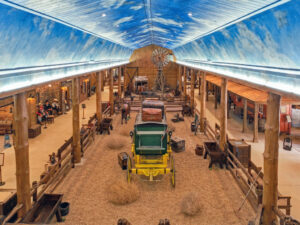 We’ve brought the Wild, Wild West to Westerville! The Old West Town is a one-of-a-kind destination within the Friesian Empire Events Center, designed to transport you back to the 1800s with striking authenticity and immersive charm.
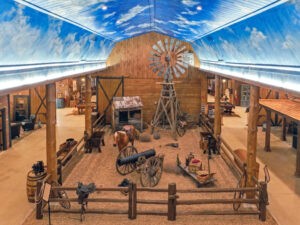 Originally the main barn of the equestrian center, this area has been transformed into a dynamic environment that many visitors now describe as a living Old West museum. Spanning over 9,200 square feet, this carefully curated space captures the spirit and character of a frontier town, complete with museum-quality details. Guests are greeted by the sights and sounds of a bygone era as they stroll past recreated staples of western life. Each structure has been thoughtfully designed to feel as real and lived-in as the originals, using both authentic 19th-century artifacts and historically inspired craftsmanship.
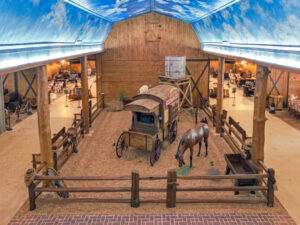
The center of our Old West Town was reproduced directly from 1800s photos of real towns, capturing the look and feel of a time when dusty roads, horse-drawn wagons, and wooden storefronts lined the horizon. It’s bordered by split rail fencing, giving structure and authenticity to the space, while stamped brick concrete walkways connect the east and west sides—replicating the worn footpaths used by townsfolk, tradesmen, and travelers.
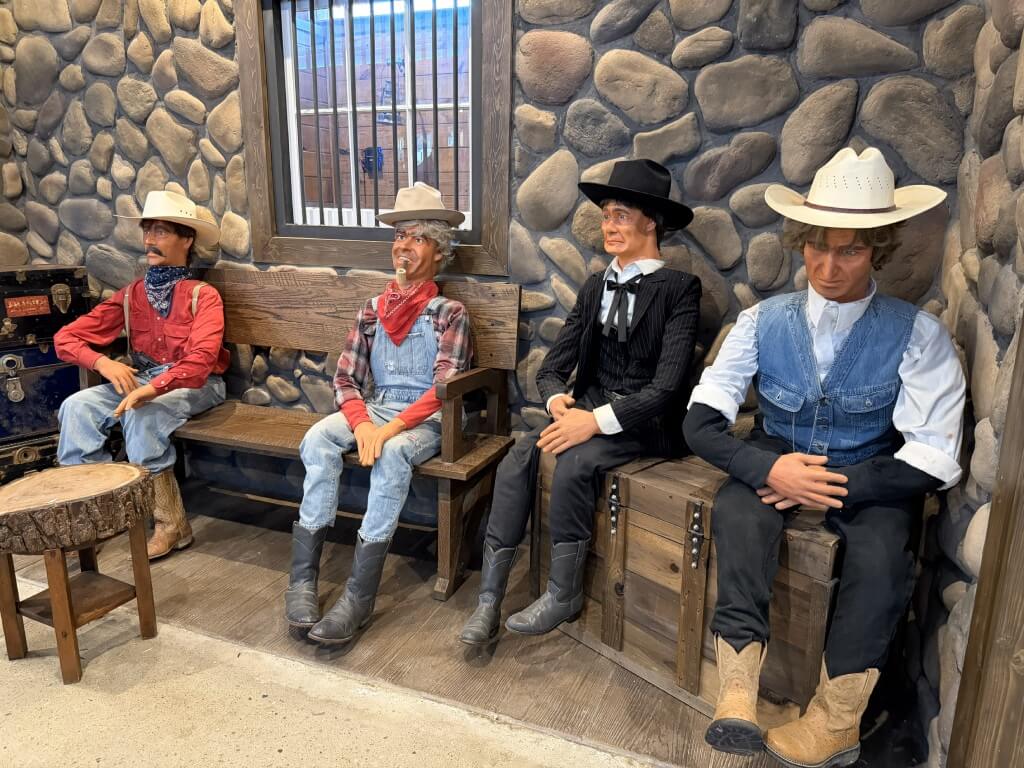
Scattered throughout are vintage antiques and other rustic props that set the scene for unforgettable photos and unforgettable memories. Wooden benches line both sides of the street, inviting guests to sit, relax, and soak in the atmosphere, adding a layer of wonder and ambiance.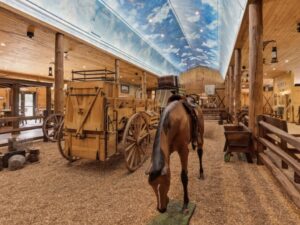
Recreating our Old West Town has been a true labor of love—one that’s taken years of dedication, passion, and acute attention to detail. Every building, artifact, and display has been carefully curated to reflect life in the 1800s as authentically as possible. It’s more than a setting—it’s a moment frozen in time, and it’s all waiting for you to discover!




 A Legend of the Old West In 1852, Wells, Fargo & Co. was founded—and in doing so, forever changed the course of the American West. Born out of California’s explosive growth during the Gold Rush, the company was created to provide fast, reliable “express” banking and transport services across the frontier. Early on, Wells Fargo began transferring gold, mail, and valuables between the coasts—often relying on stagecoaches and lone riders long before the Transcontinental Railroad stretched across the land.
Because these stagecoaches carried such high-value cargo, including gold and payroll, they quickly became prized targets for outlaws and desperadoes. Between 1870 and 1884, an estimated 347 stagecoach robberies were attempted or successfully carried out. In response, Wells Fargo began placing armed guards on board—giving rise to the iconic phrase “riding shotgun.”
Wells Fargo grew rapidly, acquiring competing express companies and even operating portions of the famed Pony Express. In 1872, they struck a deal to run express services along the expanding Transcontinental Railroad. As the iron rails reached farther across the country, reliance on stagecoaches declined. Yet stage lines remained vital in connecting remote communities to the rail hubs well into the early 20th century.
More than just mail carriers, stagecoaches served as the fastest and safest means of long-distance travel across the rugged frontier. They transported passengers, goods, and the promise of civilization into the untamed West.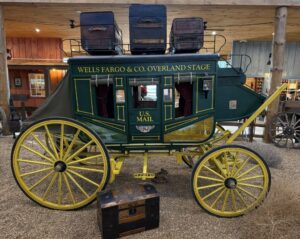
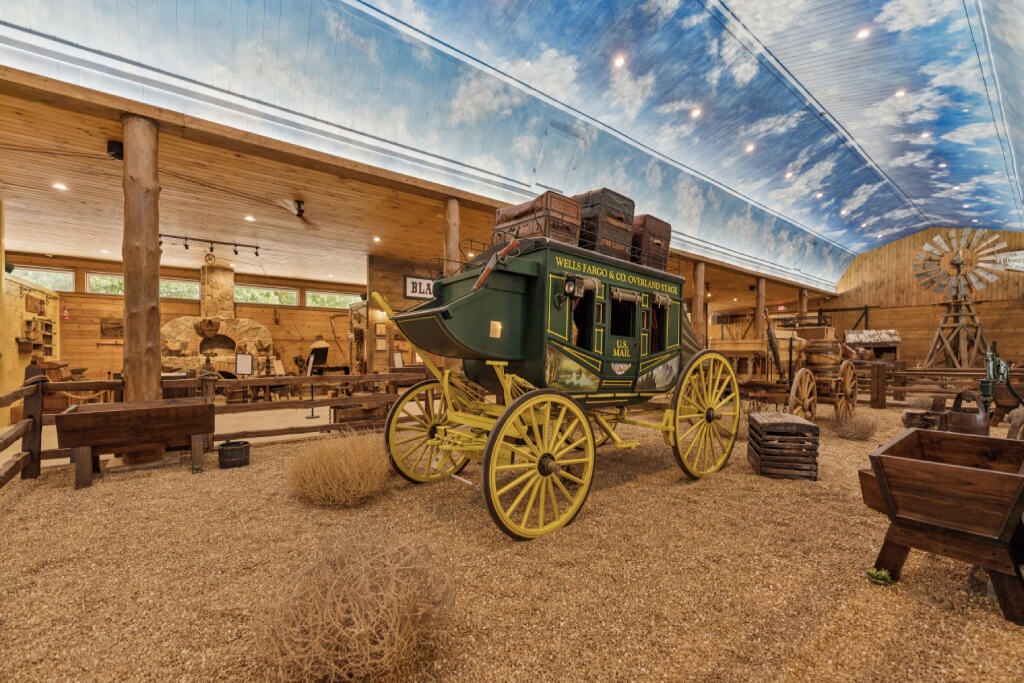
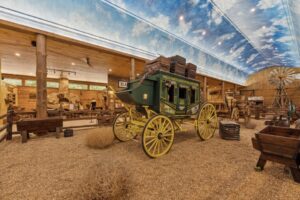
The stagecoach featured here is a finely crafted, fully functional reproduction of a classic Wells Fargo coach—built in the spirit and style of the originals. Constructed primarily from sturdy oak, it’s outfitted with iron mountings, finished in black enamel, and suspended on traditional leather thorough braces—an ingenious early form of shock absorption.
The coach proudly bears the markings “U.S. MAIL” beneath the driver’s seat and “WELLS, FARGO & COMPANY” along the upper panels of both sides. It comes equipped with two yokes and a rooftop luggage rack complete with period-style baggage—offering a striking and authentic visual straight out of the 1800s.
Though Wells Fargo’s reign over the stagecoach era was brief—lasting just a few years from 1866 until the completion of the Transcontinental Railroad in 1869—their legacy endures. The final spike was driven at Promontory Summit, Utah Territory, on May 10, 1869, signaling the end of an era… but the beginning of a legend.
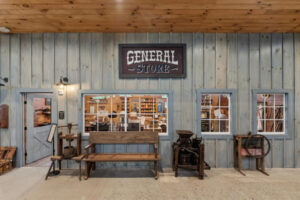 Step into our authentically recreated general store, where every shelf, barrel, and bolt of fabric echoes the charm and necessity of frontier life.
An 1800s general store was the heart of many small towns and rural communities—a place where people gathered not only to shop, but to catch up on news and connect with neighbors. The store was typically a wooden structure, multi-paned windows that displayed goods like bolts of fabric, tools, and canned goods to lure passersby. A hand-painted sign bearing the store’s name often hung above the entrance or on a swinging board.
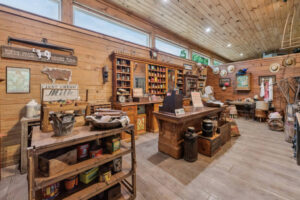 Inside, shelves lined the walls and were stacked high with an eclectic mix of goods—everything from dry goods, tobacco, and coffee beans to lanterns, nails, and yard goods. A long wooden counter dominates the center of the store, with a cash register and scales for weighing produce or bulk goods. Behind the counter, the shopkeeper would measure out items by the pound, cut fabric to order, or keep tabs on purchases in a thick ledger.
Barrels and crates were scattered throughout the space, and a potbelly stove provided warmth in the colder months, doubling as a gathering spot for customers to linger and chat.
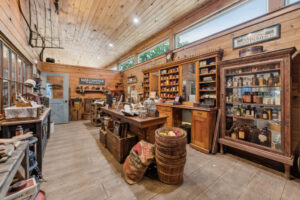 This storefront tends to be the location our visitors spend the most time observing and took the longest to recreate. Its wooden siding, and intricate details—right down to the old looking windows—capture the essence of a bygone era. Reconstructing it required extensive research and craftsmanship to ensure historical accuracy, making it a standout piece in our Old West Town.
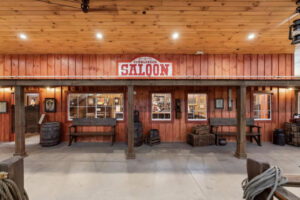 Welcome to the Tumbleweed Saloon, where you can just imagine the scent of sawdust and whiskey hanging in the air as it once did, and every detail—from the custom bar to the poker table stakes—revives the wild spirit of the Old West.
The 1800s Tumbleweed Saloon captures the lively, rough-and-rowdy spirit of the Old West. As you step through the swinging batwing doors, you’re instantly transported to a time when cowboys, prospectors, and travelers sought refuge, refreshment, and revelry after long days on the trail. Just imagine the air feels thick with history, music, and the faint scent of whiskey and wood smoke.
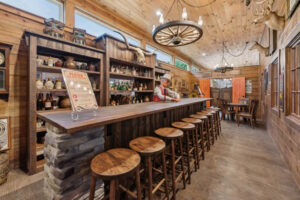 This saloon was inspired by hundreds of 1800s saloons. Its design reflects the vibrant character and atmosphere of that era. A custom-built wooden bar stretches across the center of the room, accented with hand-laid stonework and seating for patrons to belly up for a drink. Behind the bar, shelves are lined with replica 19th-century bottles—carefully arranged so guests could, just as they did back then, choose their drink based on what they saw.
A weathered upright piano stands in one corner, a nod to the tunes that once filled the room, played by saloon girls or wandering musicians. The main floor features replica poker tables straight out of the 1800s, complete with antique-style playing cards and even brothel tokens—small, historical curiosities that hint at the saloon’s colorful past.
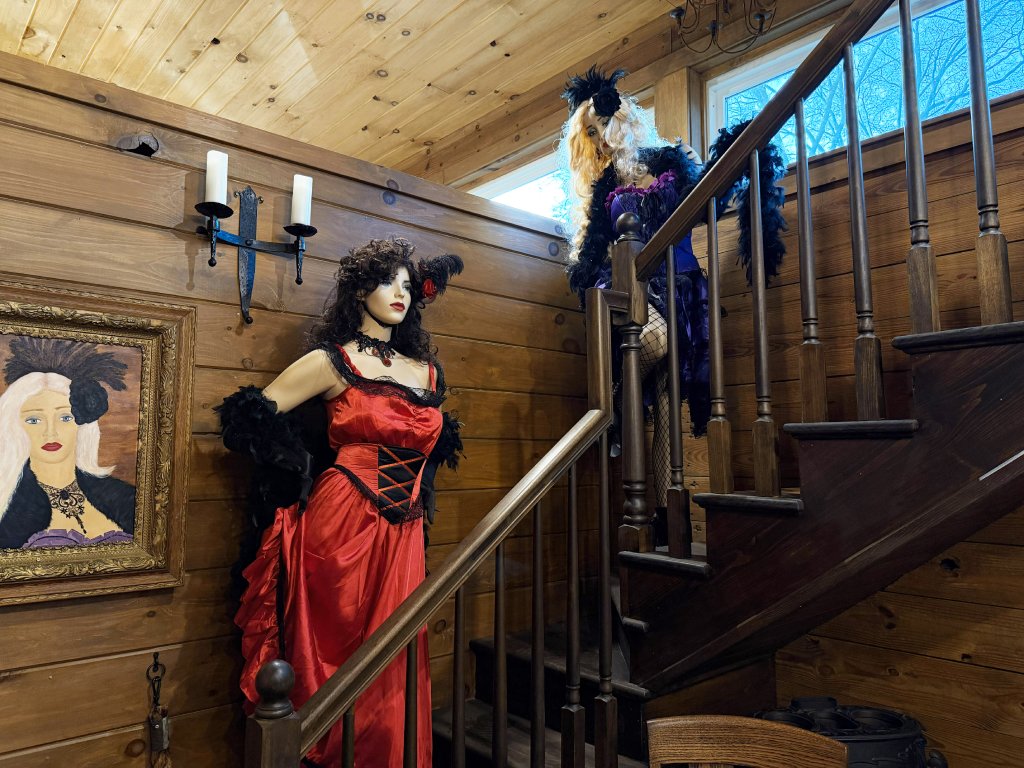
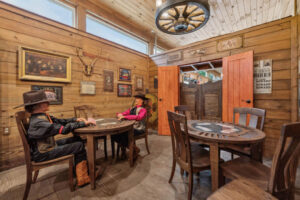 Adding to the immersive experience are several lifelike mannequins: a stern-faced barkeep behind the bar, two saloon girls perched on a staircase leading to the upper quarters, and two cowboys mid-game at a poker table, frozen in a moment of tense bluffing and bad luck.
The walls are adorned with authentic-style decor—everything from wanted posters and oil lamps to vintage rifles and portraits, all items that would’ve been common in a real saloon of the time. Every detail, down to the worn “wood-look” floor and dusty corners, has been carefully crafted to reflect life in the Old West.
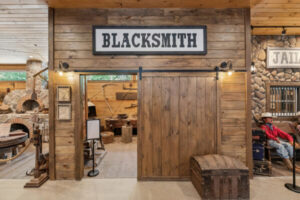 Enter the forge where fire meets iron—our blacksmith shop is a non-working tribute to the golden age of American craftsmanship, recreated with insight from master Amish smiths and historical precision
The 1800s Blacksmith Shop is a striking representation of one of the most vital trades in early American life. More than just a place to shoe horses, it was the beating heart of a growing community—where tools were forged, repairs were made, and innovation took shape in fire and iron.
We researched many photos and images of 1800’s blacksmith shops to design ours. Every detail was carefully chosen to reflect the authentic look and function of a working blacksmith shop from the 19th century. In addition, we had Amish blacksmiths assist in organizing the contents, ensuring that every tool, piece of equipment, and layout choice was rooted in time-honored knowledge and real-world experience.
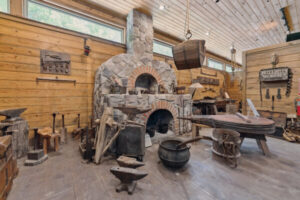 In the 1800s, blacksmiths were responsible for far more than just horseshoes. In colonial and frontier communities, their craft extended to household hardware, farming tools, weaponry, and a wide range of items for daily life. Within our shop, visitors can see examples of nails, swords, hatchets, axe heads, bullets, anchors, anchor chains, hooks, iron hoops, shipwright tools, anvils, hinges, hammer heads, gates, gate locks, wheelbarrows, and more—all items that would have been commonly made or repaired by a skilled smith.
Historians often refer to the first half of the 19th century as the “golden age” of American blacksmithing, when the demand for metalwork surged due to the growth of frontier towns and homesteads. Blacksmiths who could take on a wide range of specialized work were highly valued. The best smiths became “jacks of all trades,” able to fulfill the needs of farmers, builders, soldiers, and tradesmen alike.
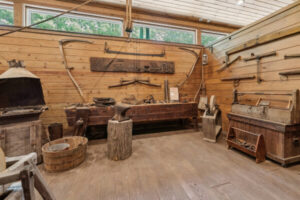 At the core of any blacksmith shop were the essential tools of the trade: the forge, bellows, and anvil. Our recreated shop features these fundamental pieces, along with a variety of smaller tools including hammers, chisels, tongs, forms, and wedges. These tools allowed blacksmiths to heat, shape, and manipulate metal to suit nearly any need. Tongs helped position metal in the hottest part of the charcoal-fed forge, while hammers and chisels were used to form custom shapes and fittings.
If a tool didn’t exist for a particular job, a blacksmith would often make it himself. Over a lifetime, a blacksmith might amass hundreds of tools, many of which served a single, specialized purpose. Many such items are proudly displayed in our shop today, providing a glimpse into the ingenuity and adaptability that defined this crucial profession.
Whether you’re admiring the heavy forge, the unique hand-forged tools, or imagining the clang of hammer on iron, our blacksmith shop offers an unforgettable journey into the craftsmanship and labor that helped build early America.
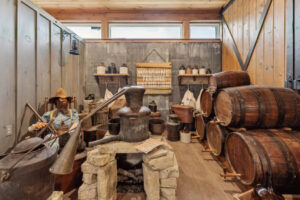 Hidden in plain sight, our 1800s whiskey still captures the bold, smoky heart of bootlegging days gone by—complete with a watchful proprietor keeping a lazy eye on his bubbling copper creation.
The 1800s Whiskey Still is a gritty, atmospheric glimpse into the world of early American distilling and backwoods bootlegging. Tucked away in a secluded corner that hints at secrecy and rebellion, this scene immerses visitors in the raw and rugged process of whiskey-making during a time when stills were often hidden from the law.
Feel what it must have been like in the 1800s to make whiskey and be a bootlegger. Surrounded by barrels, copper coils, and the scent of mash in the air, you’re transported to a time when whiskey wasn’t just a drink—it was currency, culture, and, for some, a calling. In rural communities, where cash was scarce and laws were looser, homemade whiskey was often a way of life. It fueled gatherings, warmed cold nights, and occasionally sparked trouble with the taxman.
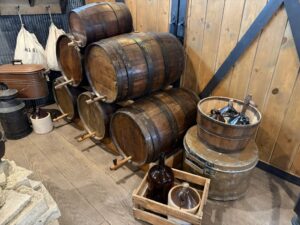 The still itself is a centerpiece of copper and fire, complete with the classic components—pot, swan neck, and condenser—set up to distill spirits from fermented grain mash. Buckets and jugs are scattered around, ready to be filled with the finished product. The scent of corn, rye, and barley mash lingers in the air, offering a full sensory experience.
Our proprietor is lounging in a chair watching over his still, a sly smile on his face and a jug by his side. His posture is relaxed, but his eyes are sharp—he knows that while the fire is hot and the copper is bubbling, he’s walking the line between craftsman and outlaw. His world is one of hidden trails, whispered deals, and careful measurements, where every batch could bring either celebration or consequences.
This exhibit offers more than a visual—it’s a moment frozen in time that invites you to imagine the risk, reward, and resilience of those who lived by their wits and distilled with their hands. Whether for profit or passion, the whiskey still was a symbol of frontier spirit and fierce independence.
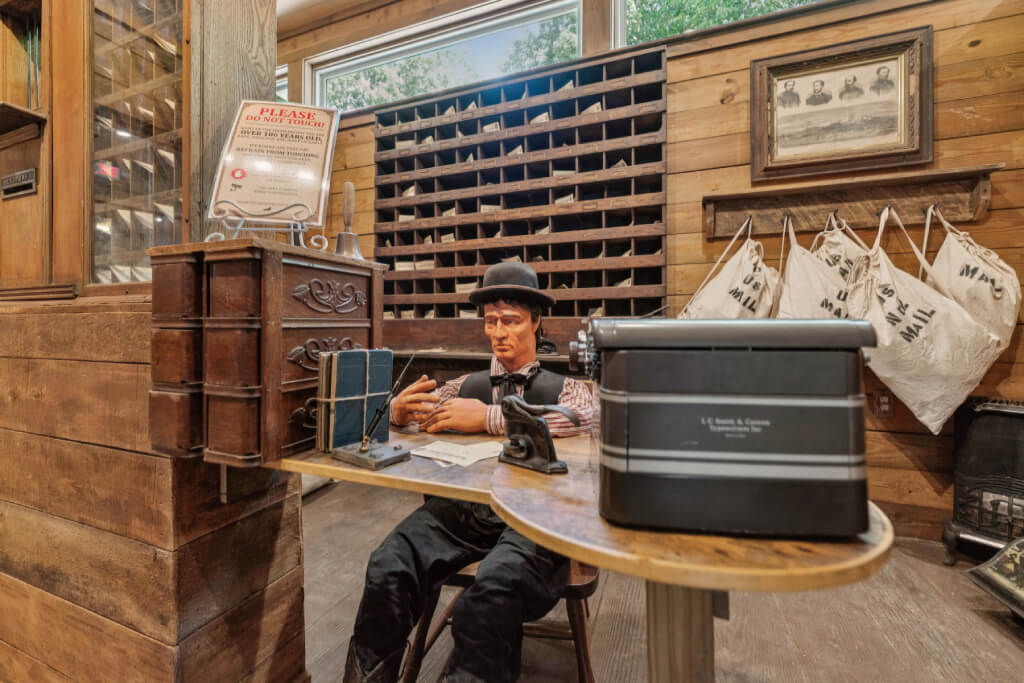
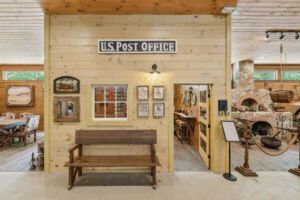 Step into our meticulously crafted 1800s post office, where every pigeonhole, hand-cranked stamp, and handwritten postcard brings back a time when letters carried the weight of the world.
An 1800s post office was a small but essential hub of communication, often tucked inside a general store, a stand-alone wooden building, or even part of someone’s home in rural towns. Though modest in size, it was a place buzzing with anticipation, community news, and the hope of faraway connections.
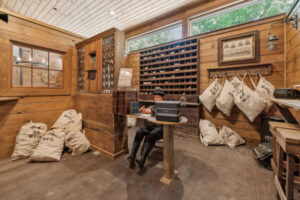 The building itself was typically simple—wood-framed, with a shingled roof and a weathered sign that simply read “Post Office.” Inside, the room was functional and no-frills, with wide plank floors, exposed beams, and walls lined with pigeonholes or cubbies where letters and packages were sorted and stored. A long wooden counter separated the postmaster from the public, with small brass mail slots or boxes built into the back wall.
Behind that counter, the postmaster—often a well-respected figure in the community—handled letters, newspapers, and parcels. He or she would use a hand-cranked cancellation stamp, log deliveries in thick ledgers, and prepare mailbags for the next coach or horseback rider. In some locations, the mail arrived via stagecoach, while in more remote areas, it came by horseback through the Pony Express or local couriers.
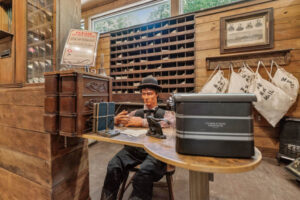 The post office was also a social stop. People lingered to chat, exchange news, or check the bulletin board for job postings, look at wanted posters, lost-and-found notices, or government announcements. It was where soldiers sent word from the front, families waited anxiously for letters from loved ones who had moved west, and businesses communicated across great distances.
Though small and simple, the 1800s post office was a lifeline—a place that connected the scattered dots of the growing nation, one letter at a time.
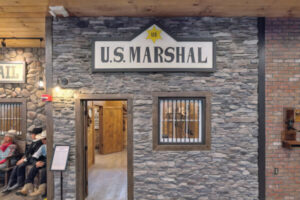 Take a seat in the Marshal’s office, across from our Marshal, where law and order were upheld with determination, a steady hand, and the ever-present weight of a town’s trust—every paper, poster, and pair of cell keys placed with historical care.
An 1800s U.S. Marshal’s office was a no-nonsense, multifunctional space that served as the lawman’s headquarters, a public deterrent to crime, and often the first stop for anyone caught breaking the law. Usually located near the center of town—often right beside a bank or post office—it was a modest wooden building, typically marked with a hand-painted “Marshal” sign and maybe a star on the door.
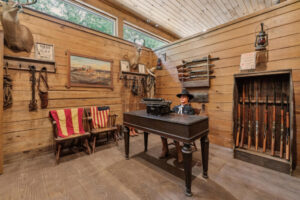
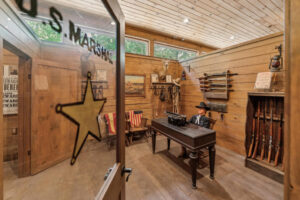 Inside, The Marshal’s office was equal parts workplace and holding area. The front room featured a simple wooden desk piled with paperwork, wanted posters, and a lantern or oil lamp. A sturdy chair sat behind the desk, where the sheriff would write reports, record arrests in a leather-bound logbook, or keep an eye on visitors. Behind the desk, a rifle rack might hold a shotgun or Winchester, and a peg on the wall likely held a hat, coat, and the unmistakable iron key ring.
On the walls were wanted posters, notices of town meetings, and occasionally a bulletin board with rewards or warnings. A small stove or fireplace provided heat in the colder months, and a cracked window might be propped open in summer to let in some breeze—or the distant sounds of the town.
 Connected to the main room were one or two iron-barred jail cells, visible to the Marshal at all times. These were small, bare-bones enclosures with a cot, a blanket, and a bucket—nothing more. They held drunks sleeping off a saloon fight, petty thieves, or suspects awaiting a traveling judge or circuit court.
The Marhsal’s role went far beyond just enforcing the law—he was also the town’s peacekeeper, investigator, and sometimes even the judge in minor disputes. Whether facing down outlaws, keeping the peace at community events, or tracking a stolen horse, the Marshal operated from this simple but essential stronghold of law and order.
Though humble in size, the 1800s Marshall’s office symbolized justice, authority, and the strength of a growing American town determined to keep order on the frontier.
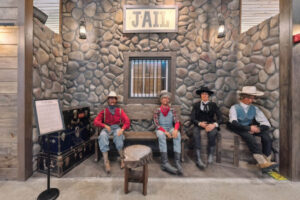 Cross the threshold of our 1800s jail and you’ll feel it—the chill of iron bars, the grit of justice, and the quiet authority of a place where outlaws met their reckoning.
An 1800s jail was a stark and rugged place—more about confinement than comfort, designed to keep lawbreakers under lock and key in a time when justice was swift and often local. Usually built near the town center, the jail was a small, squat building made of thick timber or rough-hewn stone, with iron bars on the windows and a heavy wooden door reinforced with metal straps.
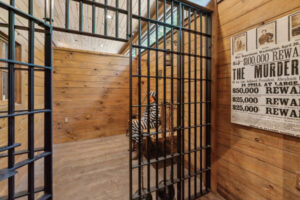 Inside, the atmosphere was cold and sparse. The air carried the scent of damp stone, old wood, and the faint metallic tang of rusted iron. Cells were small and cramped, often just big enough for a narrow cot, a hanging wooden bench, or straw mattress, a bucket, and little else. Thick iron bars and solid cell doors kept prisoners in, while large keys jingled at the side of the town sheriff or jailer.
Lighting came from kerosene lamps or small windows set high in the walls—just enough to cast long, moody shadows across the floor. The floors were often packed dirt or uneven stone, and heating was minimal, if present at all. In colder regions, a small potbelly stove might sit in the corner of the main room, but its warmth rarely reached the cells.
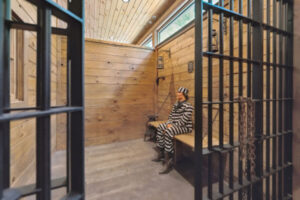 Jails of this time weren’t just for hardened criminals. They held drifters, debtors, saloon brawlers, and anyone waiting to be seen by a judge—or a traveling circuit court, if the town didn’t have one of its own. Some jails even doubled as the sheriff’s office, complete with a desk, wanted posters on the wall, and a rack of rifles or shotguns nearby.
While simple by modern standards, these early jails were a powerful symbol of law and order on the frontier—a clear message that even in the most remote towns, justice had a home.
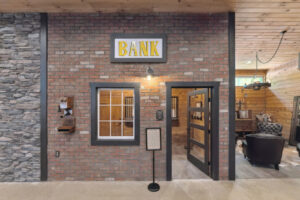 Our 1800s bank faithfully revives the pulse of frontier finance and safe-keeping—where fortunes were guarded, loans were earned, and trust was handwritten in ledgers.
An 1800s bank was a symbol of progress and prosperity in a growing frontier town—a place where gold, currency, and trust changed hands daily. Typically built from brick or sturdy timber, the bank stood out from the simpler wooden storefronts around it, often featuring large front windows, a bold sign overhead reading “BANK,” and occasionally an American flag fluttering outside to convey authority and legitimacy.
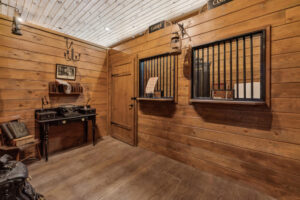 Inside, the bank had a clean, organized feel—though still simple by modern standards. A long wooden counter separated the tellers from the customers, with a decorative iron or wooden grille for protection. Behind the counter stood clerks or the bank manager, often dressed in waistcoats and bowler hats, jotting entries into ledgers with inkwells and quill pens. Shelves held stacks of account books, deposit slips, and ledgers bound in leather.
The back of the bank housed the vault—a thick iron safe or reinforced room with a heavy door and a complex locking system for the time. Inside were gold coins, silver bars, currency notes, and personal lockboxes for customers. Because robbery was a very real risk, banks often had armed guards, and many were located near the sheriff’s office for extra security.
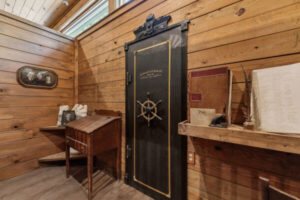 Customers came in to deposit gold dust or coin, take out loans for land or livestock, or store their savings in the safest place available. Transactions were written by hand, and bookkeeping was meticulous, as every coin and bill had to be accounted for manually.
The atmosphere was quiet, serious, and businesslike. The furniture was solid—dark-stained wood desks, chairs, and sometimes a cast iron stove in the corner. On the walls, you might see maps of the local territory, current or past President(s), framed documents, or the latest exchange rates for gold and silver.
In many towns, the bank represented hope—a place where dreams of owning land, building a business, or saving for the future could become reality. But it also came with tension, especially during hard times, when trust in the system could waver and a locked vault might be the only thing standing between stability and chaos.
The Rolling Heart of the Cattle Drive.
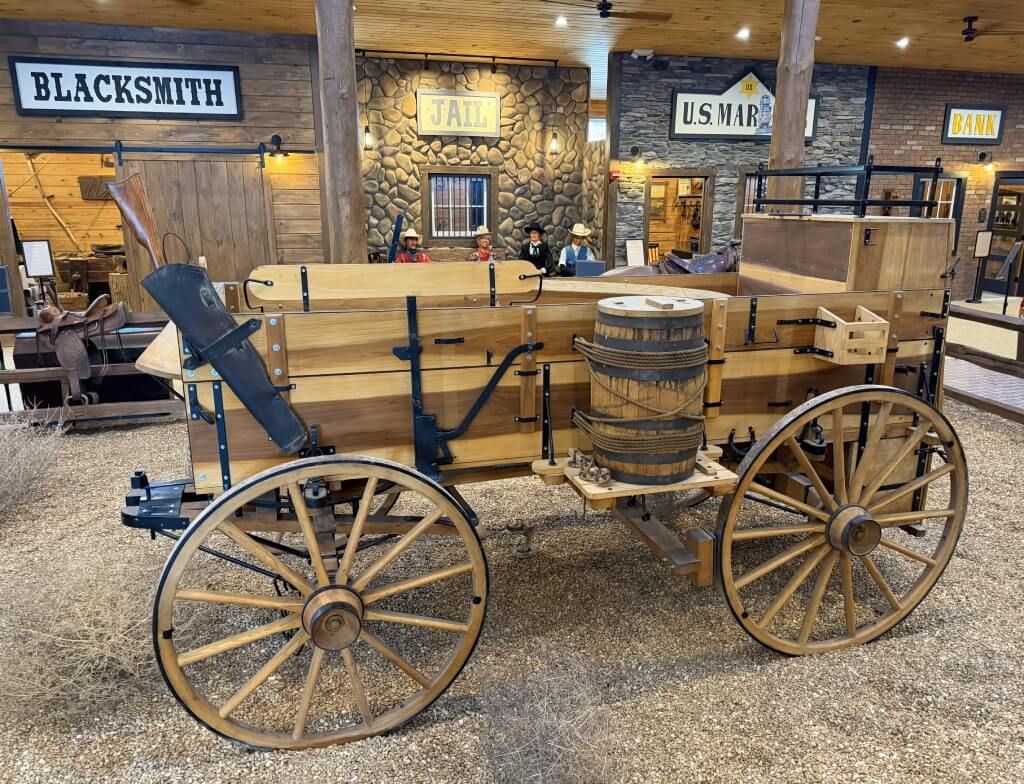
Our Chuck Wagon is a full-size, roadworthy replica of a true American icon—built to honor the rugged ingenuity of the Old West and the vital role this mobile kitchen played on the open trail.
A Cowboy’s Kitchen and Lifeline on the Trail
The very first chuck wagon rolled onto the plains in 1866, crafted by legendary rancher and trailblazer Colonel Charles Goodnight, co-founder of the famed Goodnight-Loving Trail. At a time when Texas cattle drives were booming and cowboys were in high demand, Goodnight recognized that keeping a trail crew well-fed—and morale high—was key to success. His solution? A fully outfitted mobile kitchen strong enough to withstand the grueling conditions of thousand-mile cattle drives.
Contrary to popular belief, chuck wagons weren’t part of every pioneer caravan. They were purpose-built for Texas cowboys driving massive herds northward to railheads and markets. With cowboy labor scarce and competition fierce, Goodnight’s innovation helped him recruit the best hands in the business—by promising something rare on the trail: hot, hearty meals.
 From War Wagon to Trail Legend:
 From War Wagon to Trail Legend:
Goodnight’s original design started with a sturdy army-surplus Studebaker wagon, built with steel axles and heavy-duty wheels tough enough for rough terrain. With the help of a trusted cook, he transformed it into a compact and efficient rolling kitchen. The heart of the wagon was the “chuck box”, a slanted, hinged cabinet at the rear that folded down to form a prep table. Inside, it housed drawers, shelves, and cubbies for cooking tools, spices, beans, bacon, and everything needed to feed hungry trail hands.
Beneath the chuck box was the “boot”, perfect for storing large, heavy items like the essential cast-iron Dutch oven. Outside the wagon, a water barrel and coffee grinder were mounted, while a canvas or rawhide “possum belly” swung below to carry firewood and dried cow chips for fuel. The wagon’s arched canvas top, held by wooden bows, kept supplies dry in all weather. Some wagons even featured a “jockey box” in front to store tools and heavy gear, while a pull-out fly (awning) provided shelter from the rain during meal prep.
The chuck wagon didn’t just carry food—it hauled bedrolls, medicine, ropes, tools, horse feed, and the crew’s personal gear. It served as the cook’s domain, the crew’s dining hall, and a central hub for life on the dusty trail.
Our Tribute to a Western Icon
The chuck wagon you see here is a finely crafted, fully functional tribute to Charles Goodnight’s original design. Built primarily of oak or pine and iron, it carries all the distinctive features of a true trail wagon—from the chuck box to the water barrel, to the period-style gear and luggage it hauls. Every detail tells a story of grit, innovation, and the enduring spirit of the American cowboy.
It wasn’t just a kitchen on wheels—it was survival, comfort, and community rolled into one. And it remains one of the most iconic symbols of the cattle drive era.
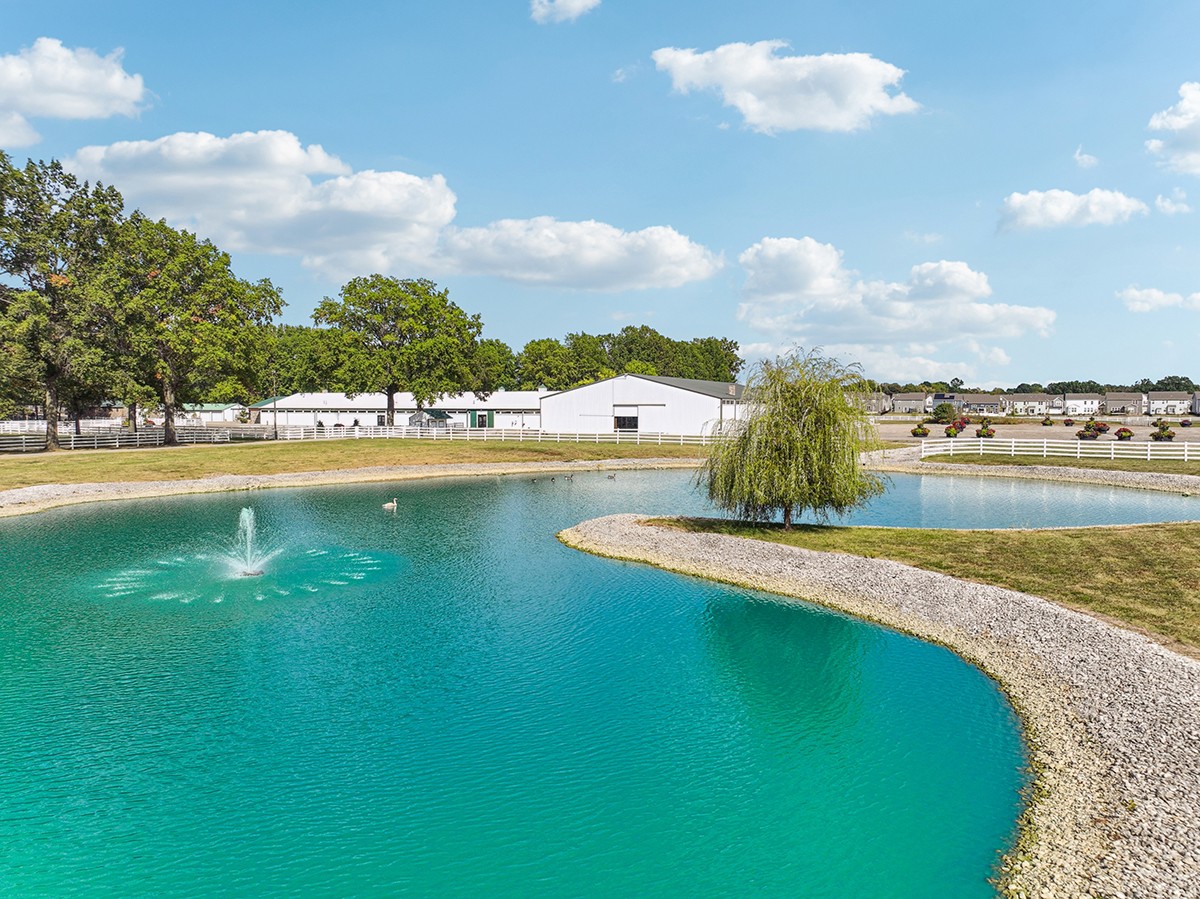


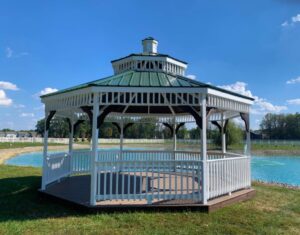 Nestled amidst the tranquil beauty of our estate is a stunning and versatile 20-foot gazebo with a multi-tiered roof and cupola, which has become a picturesque focal point of The Friesian Empire. Overlooking a serene pond and framed by our signature white four-rail fence-lined pastures, this timeless structure offers breathtaking views and endless possibilities.
Designed with elegance and versatility in mind, the gazebo serves as the perfect setting for a wide variety of intimate and memorable moments. 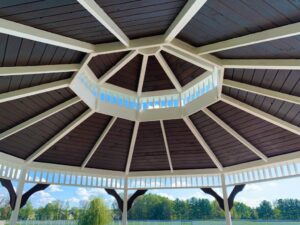 Whether you’re planning a romantic proposal, an exchange or renewal of vows, engagement photos, or even a quiet spot for peaceful reflection, the gazebo provides a naturally beautiful backdrop that effortlessly elevates the experience.
From golden hour photo shoots to twilight ceremonies under the stars, this charming space brings a storybook atmosphere to your special day. Whether decorated with florals, soft draping, or left to shine in its simple, graceful form, the gazebo is a beloved feature of The Friesian Empire—inviting love, celebration, and unforgettable memories.